Aligning content standards
Consolidating writing guidelines across teams.
Challenge
Due to a history of acquisitions and shifting platform teams, there wasn’t a centralized approach to content. Pocketed teams of writers created their own sets of writing standards, without much visibility or collaboration between business segments.
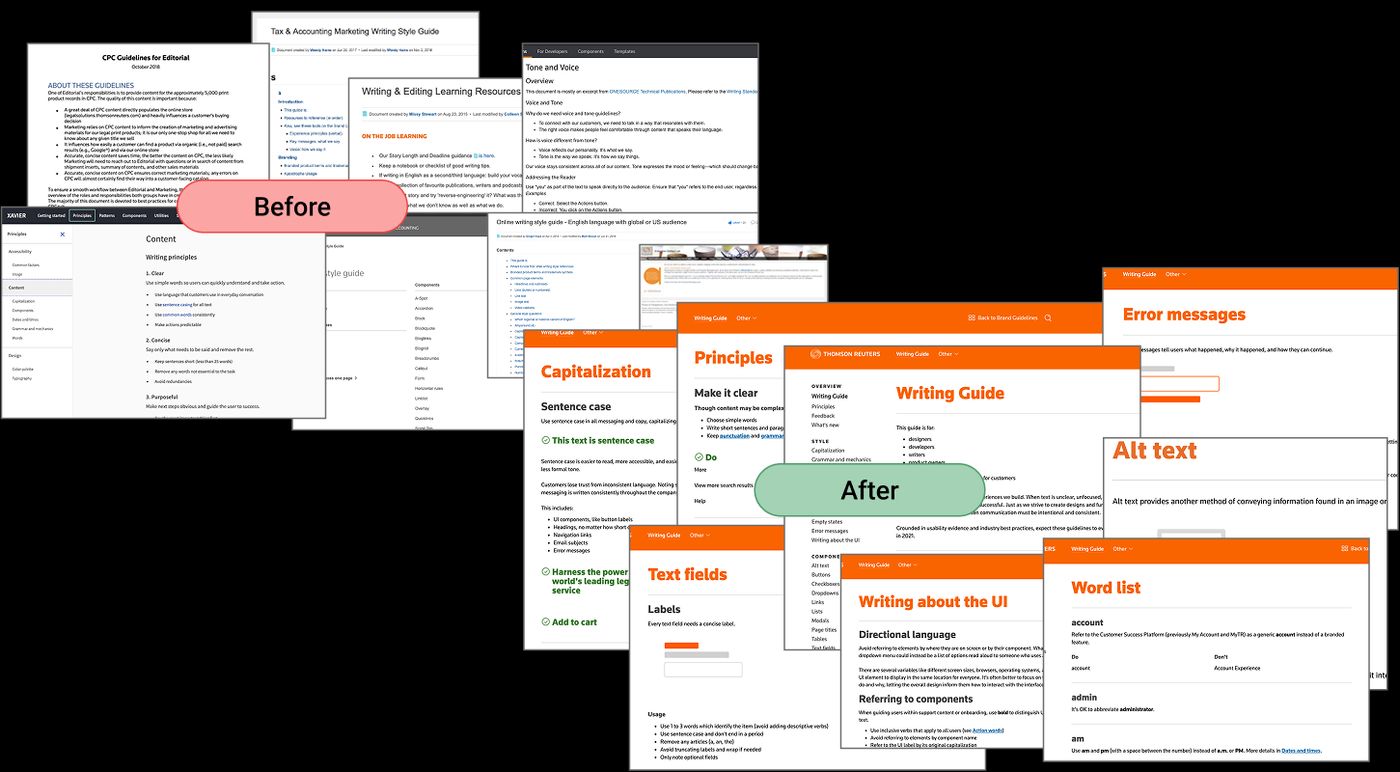
The result was solutions to pretty common customer problems getting reinvented. Without a centralized strategy, the language was inconsistent across product, marketing, and ecommerce user journeys. Even areas like capitalization differed between products.
As our UX teams were facing similar issues with design libraries, my goal was to find content standards that were agnostic of any specific products, designs, or implementation. There were long-term aspirations of a centralized design system, so my goal was to eventually integrate the content there.
Handling divergence
No one set out to create the inconsistent patterns. Much of it evolved over time as business segments became siloed or teams faced different constraints. At the time, the org didn’t have leadership roles that oversaw content the way it did for engineering.
One of the first hurdles was helping others understand that diverging standards wasn’t a binary topic. With completely separate audiences and goals, the editorial style of Reuters had little impact on the UX copy in a product that offered resources for attorneys.
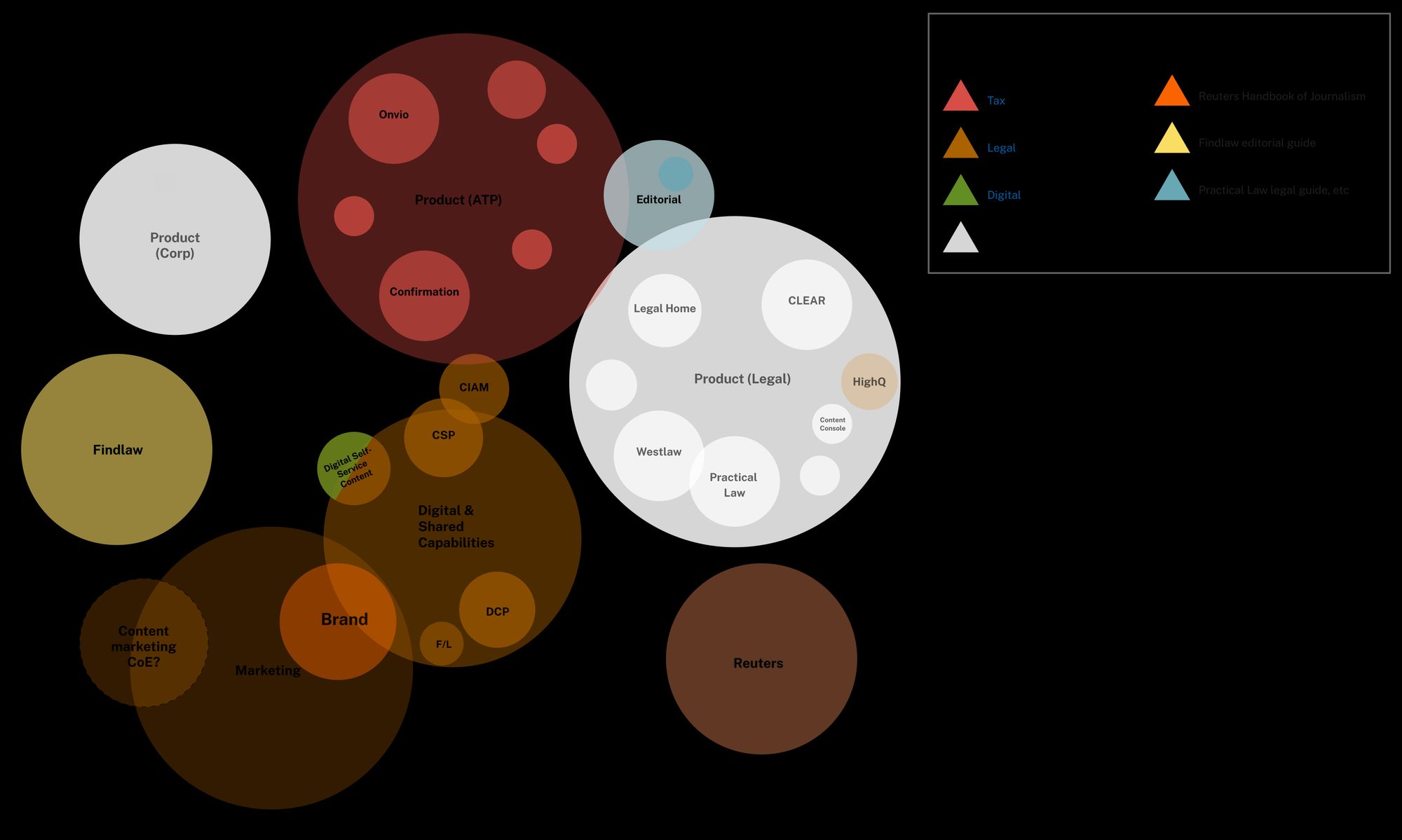
Auditing adoption of guidelines across the org helped partners visualize the existing landscape
How I helped
On a freshly spun up digital UX team, my role was to help unify the inconsistent touchpoints that customers had to navigate from initial awareness, through evaluating, purchasing, using, and renewing their subscriptions.
I facilitated a content community of practice, where writers from around the org met weekly to exchange feedback and gain more visibility to what sorts of problems others were working on.
From this broader group, I spun off a smaller committee who represented different writing teams. I was responsible for facilitating these sessions, where I helped the group prioritize trade-offs and finalize decisions.
I took those decisions and developed clear, scannable guidance in Frontify. I iterated with writers and designers on the IA of the site to deliver intuitive navigation. I designed low fidelity illustrations that could support examples, yet remain product-agnostic.
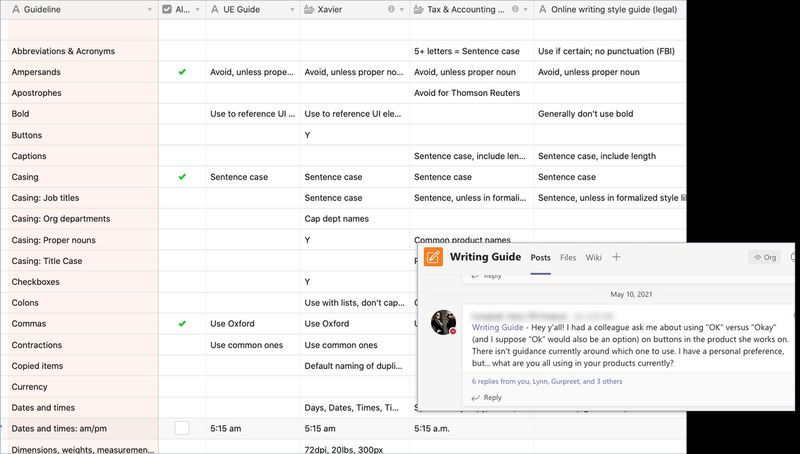
Aligning on usage
By establishing early on that we’d prioritize decisions by what supported the best usability and accessibility, it left less room for subjectivity. I introduced resources like usability studies, plainlanguage.gov, the Readability Guidelines, WCAG, and even Google Trends at times.
Content tiers
Once folks are on board with the goal, the path to getting there can still feel overwhelming. How do we prioritize where to standardize? How do we get product teams to prioritize the work?
I visualized 3 tiers of content to show how we could take an incremental approach. We wanted to focus on core standards, while providing ways for teams to share their channel-specific patterns.
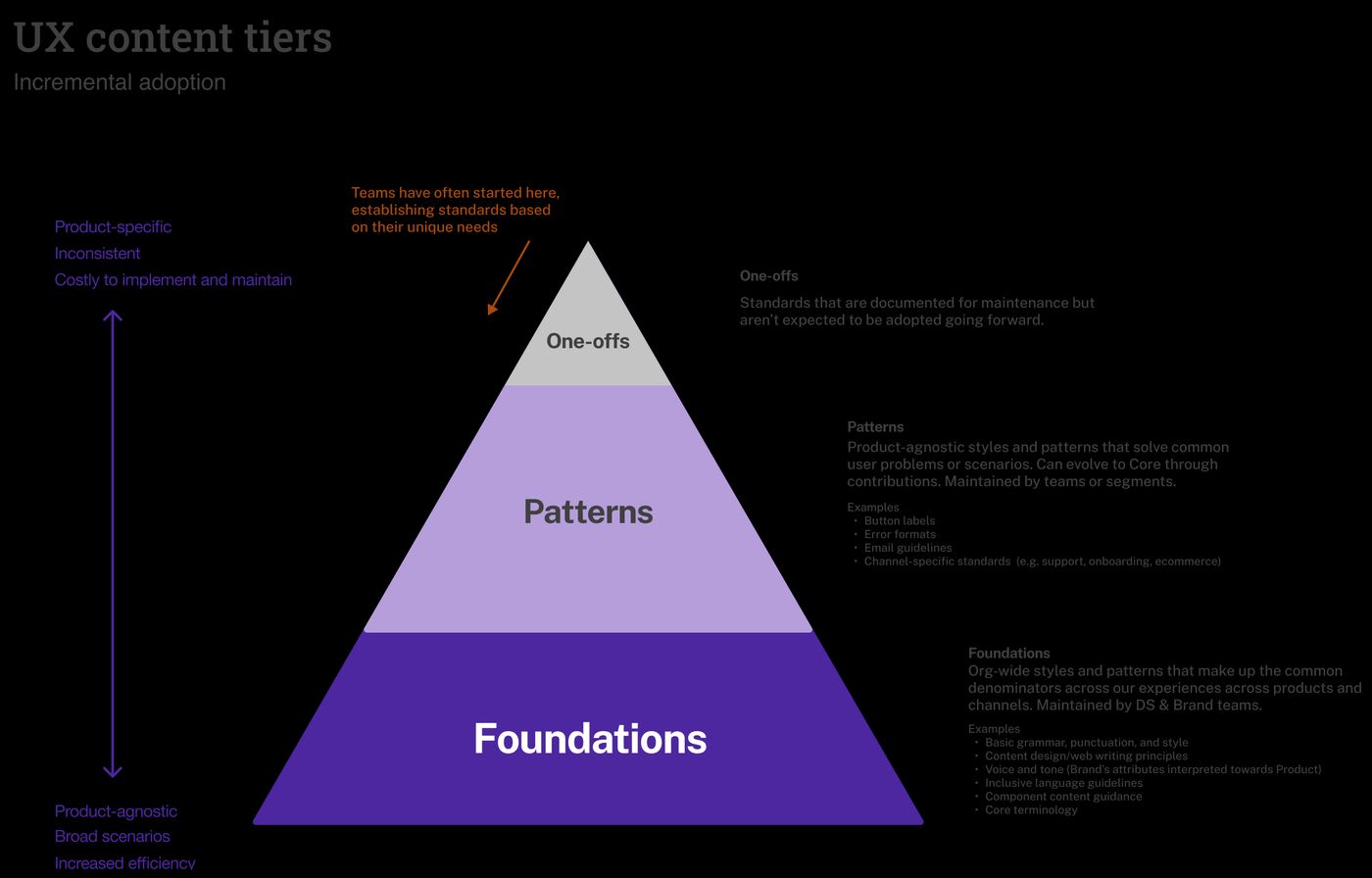
Broader content patterns empowered teams to provide channel-specific guidance for areas they knew best, helping others avoid starting from scratch. Things like best practices for emails helped marketing writers stay in sync, while making a great blueprint for a product designer who was updating a transaction email.
Outcome
The committee I led reduced many of the conflicting guidance, ultimately retiring 5 of the existing style guides.
By including input from several teams, I helped folks feel more invested in the centralized guide. As a result, they advocated for the guidelines within their project work and we noticed more devs and project managers begin referencing it.
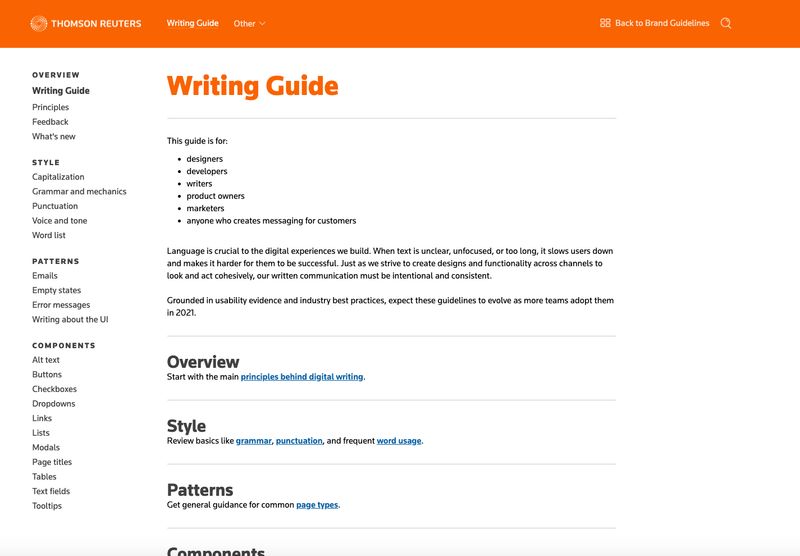
Launched version of consolidated guidelines
Ultimately, the unified writing guidelines were adopted by Design, Product, Marketing, and Brand segments.
They eventually informed the content standards that were integrated into a new enterprise-level design system.
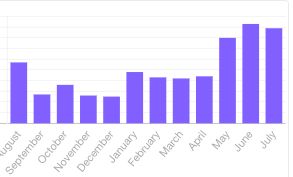
Visits to the guidelines continued to increase